Inside the Archaeological Graphic Novel That Brings the Persian Salt Man to Life
When I joined the project, my role was not simply to “draw a story,” but to help reconstruct one from scattered archaeological fragments. The finds from the Chehrābād–Douzlākh salt mine—textiles, tools, wooden elements, food remains, and even the preserved posture of the body—became my visual foundation. Working closely with archaeologists, I examined excavation photographs, technical drawings, and scientific reconstructions to understand how “Salt Man 4” might have looked, dressed, worked, and moved nearly 2,400 years ago.
The exhibition publication, which includes the graphic novel can be purchased on Amazon.
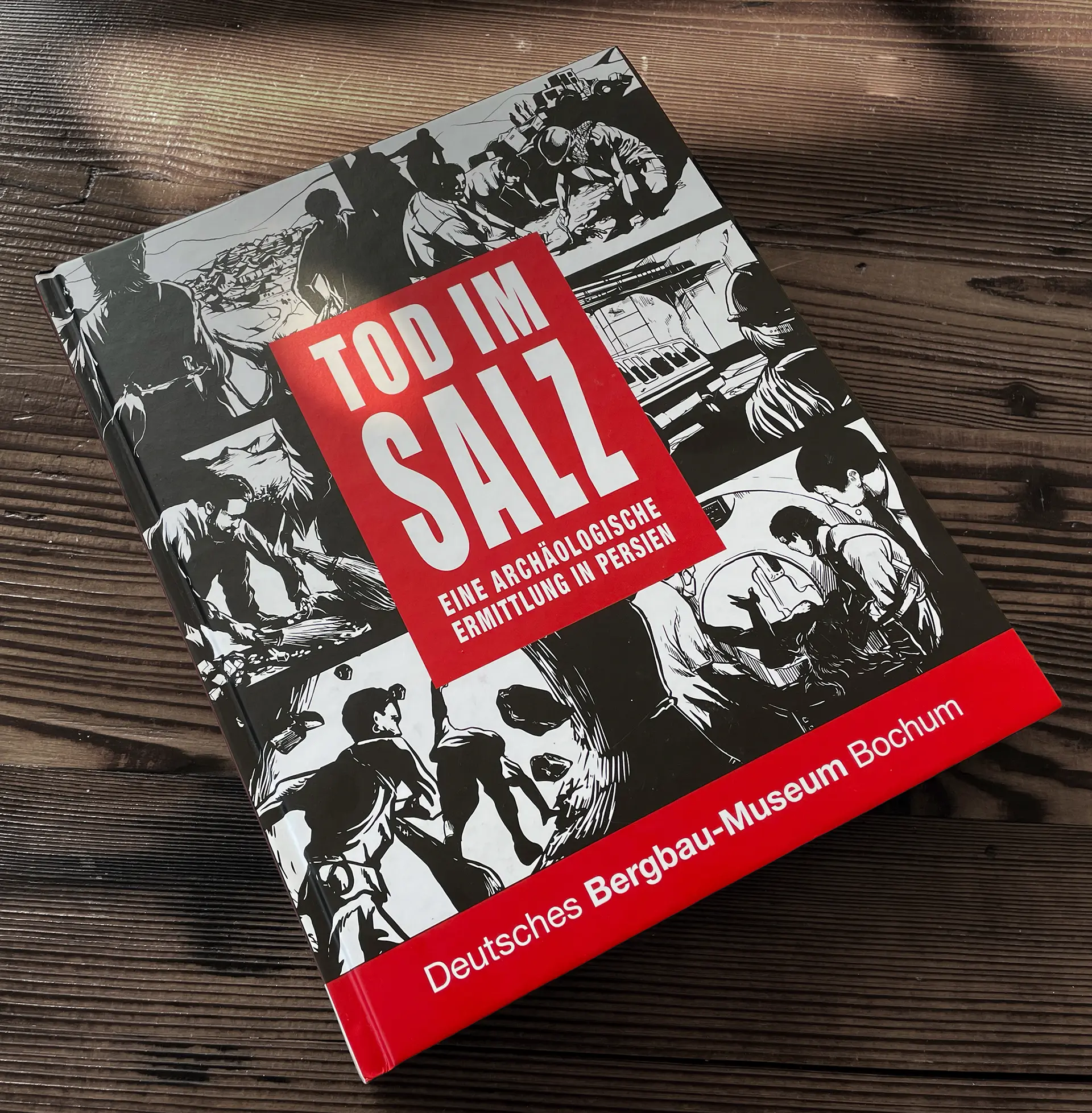
Visual Archeology
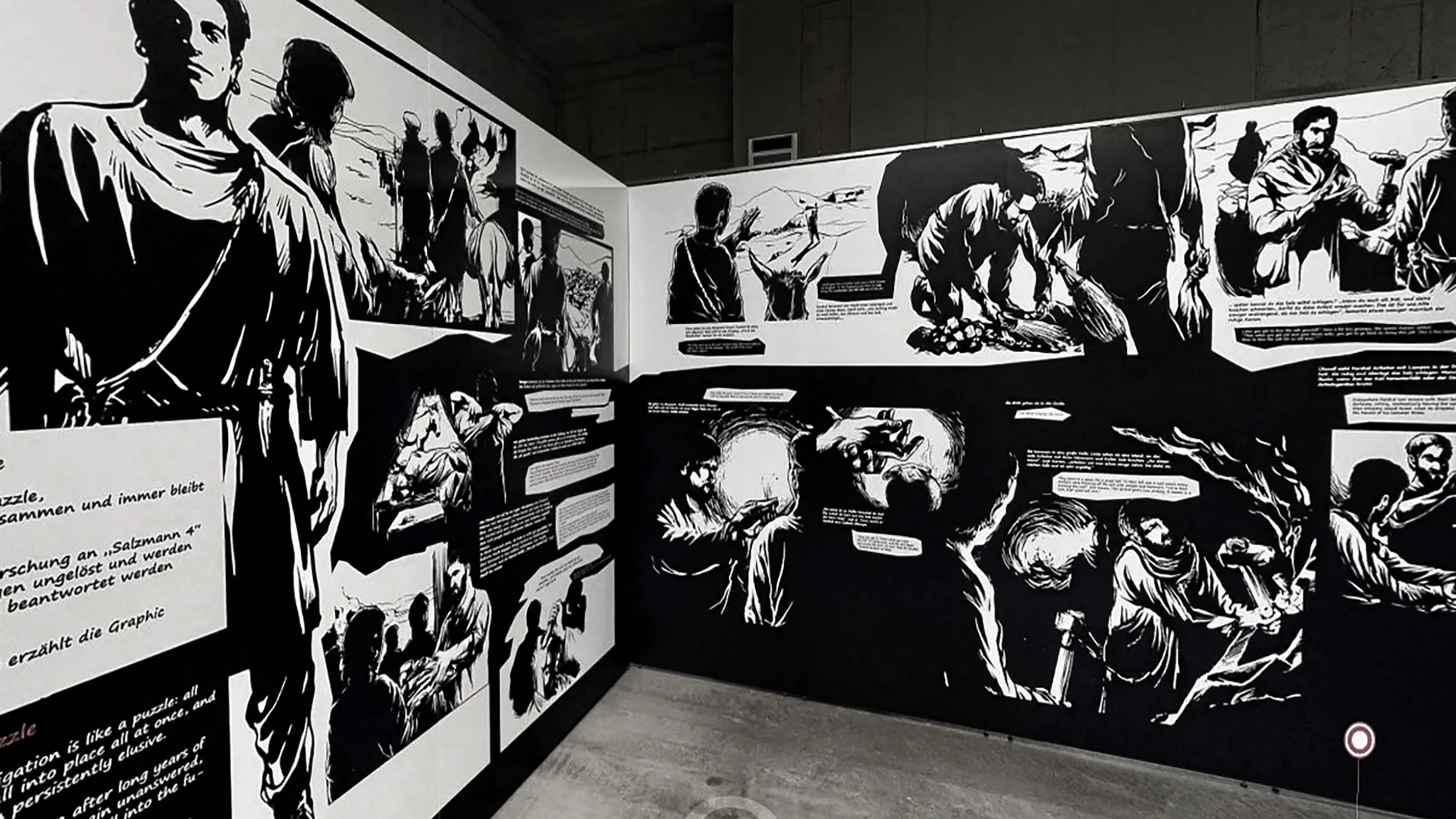
The illustration process became a kind of visual archaeology. Every scene began with evidence: the cut of a garment inferred from a few fibers, the miner’s shoes from a surviving sole, the mine’s architecture from collapsed beams and tunnel profiles. Wherever the record was incomplete, we discussed possible interpretations to ensure that any creative additions remained respectful to the data and grounded in research.
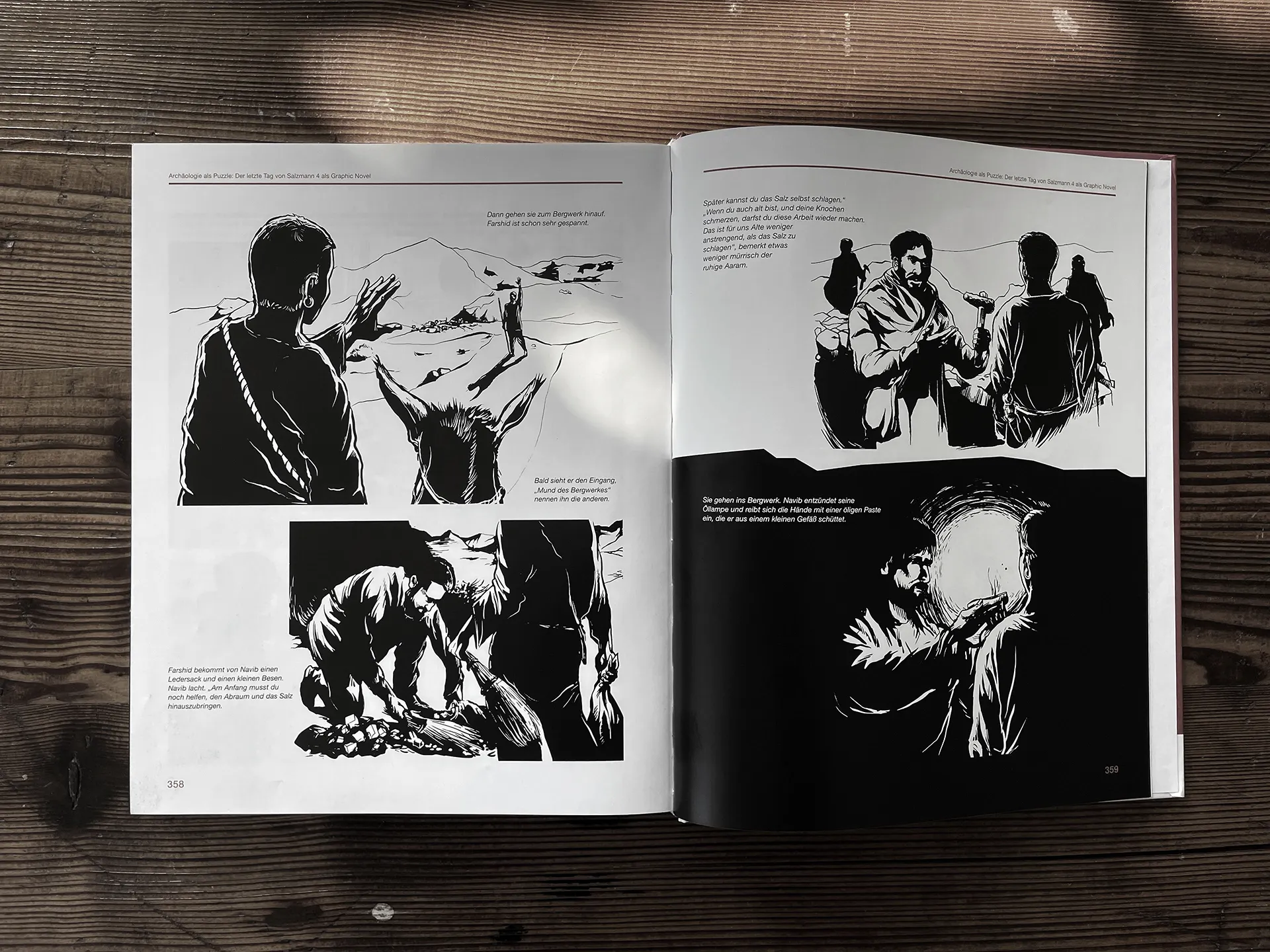
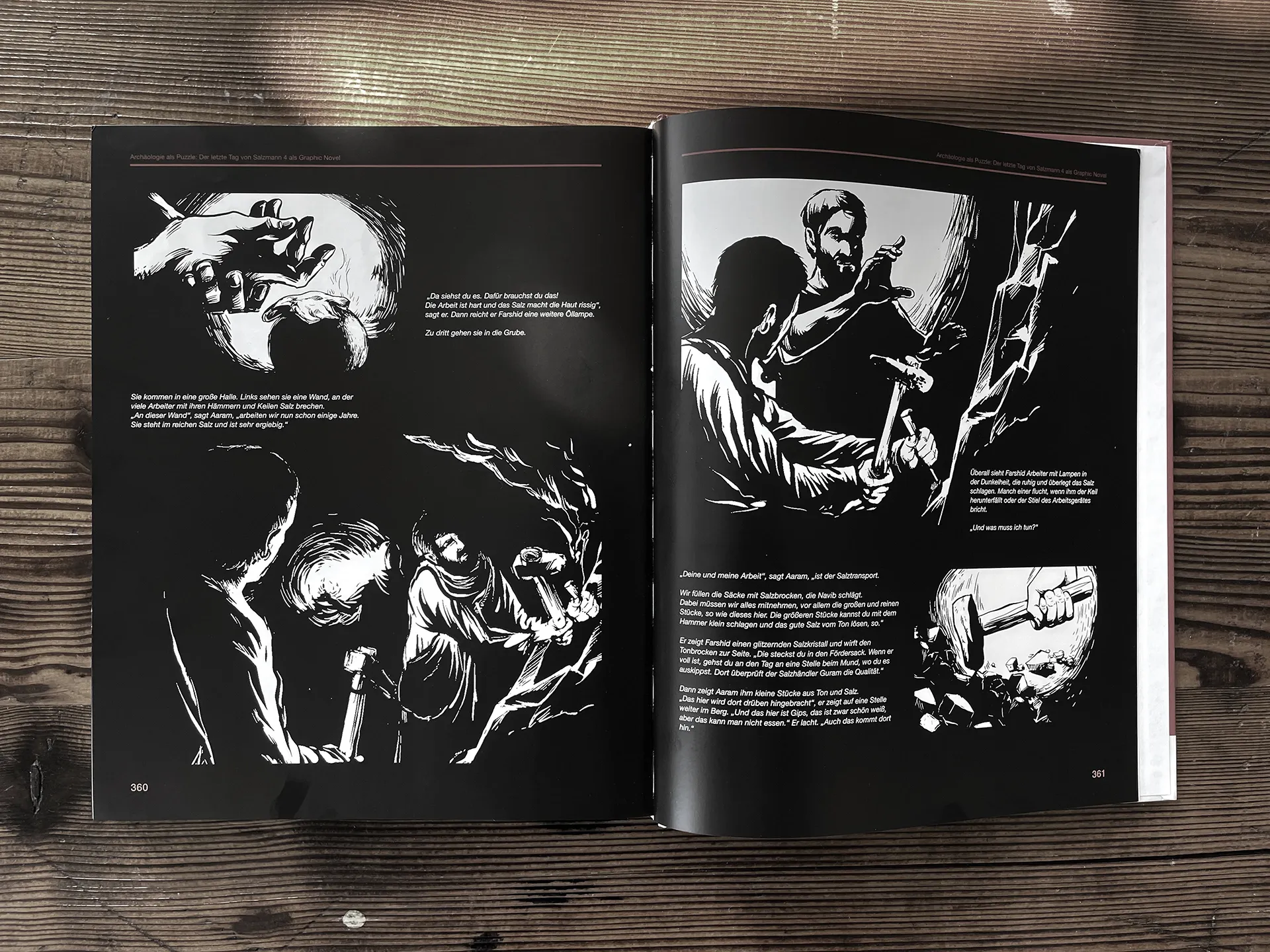

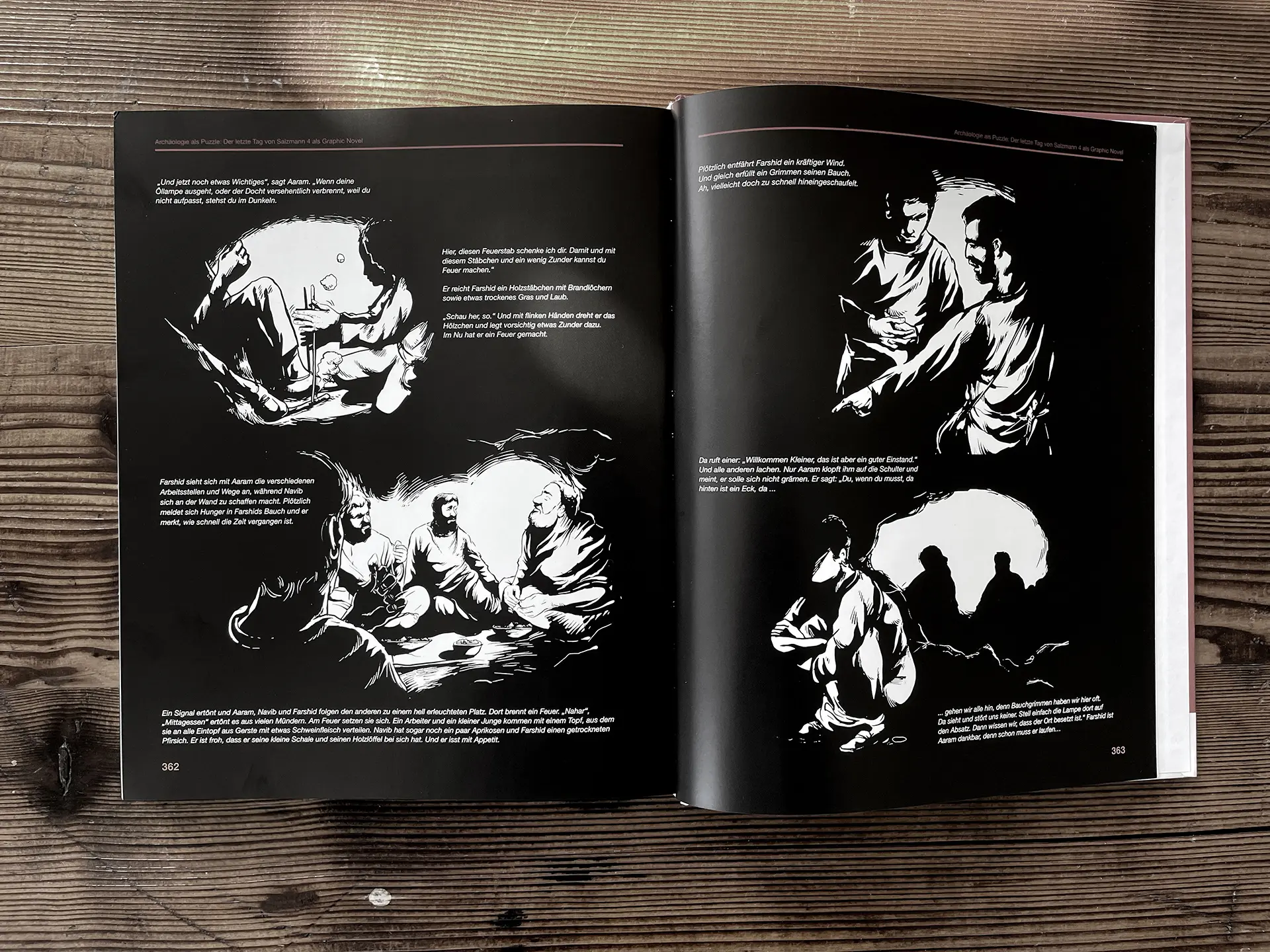
Museum Illustrations in Bochum
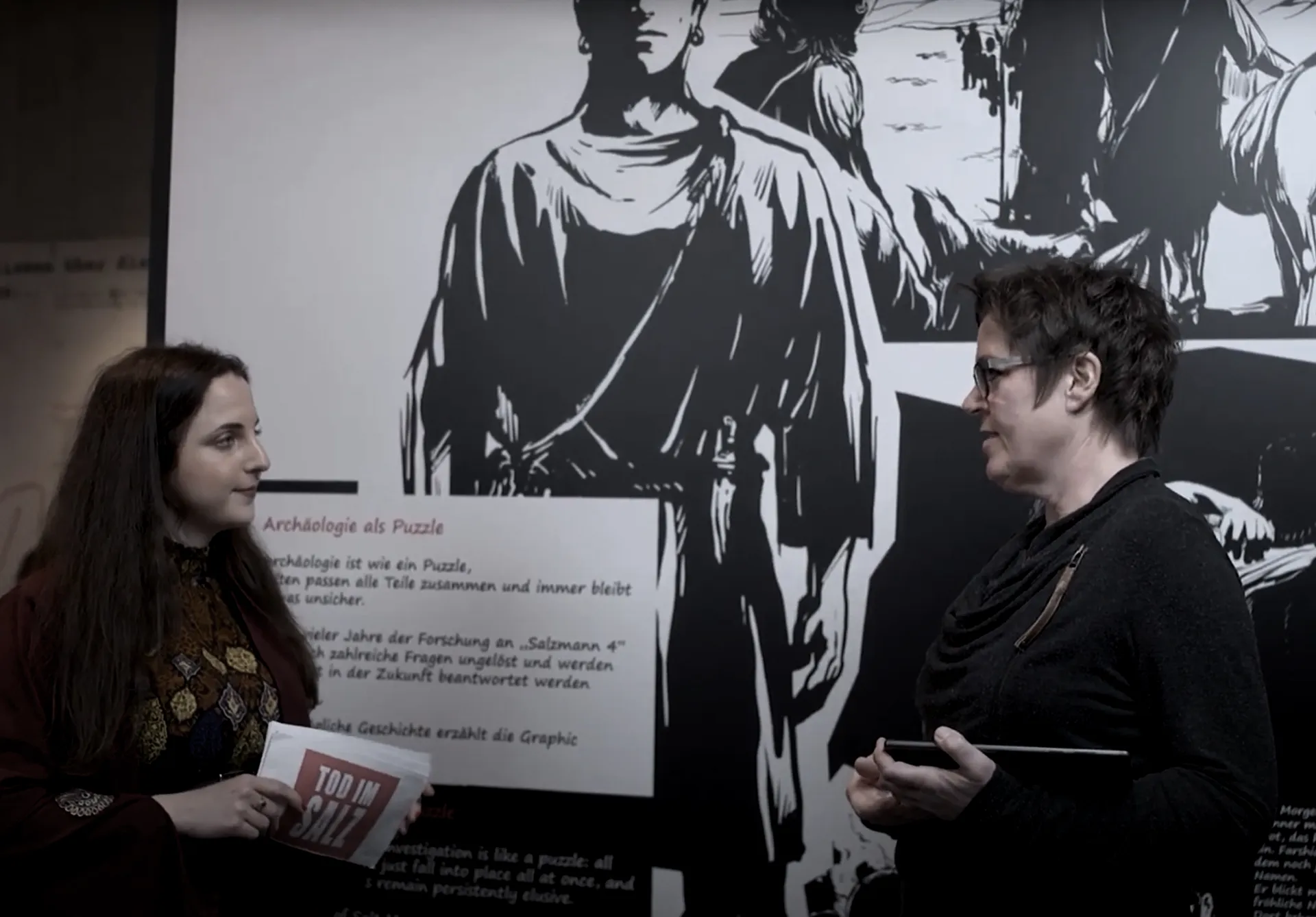
These illustrations were developed not only for my graphic novel—recounting the final day of the Achaemenid miner who died around 400 BC in a catastrophic shaft collapse—but also for large-scale displays throughout the museum exhibition. Visitors could walk among the reconstructed scenes, immersing themselves in his world. The accompanying book further expands on this work, presenting both the research and the illustrated narrative, allowing the story of “Salt Man 4” to be experienced in multiple forms.
More Projects
More related Projects in the portfolio below.